
Biofilm
Dr Mark Reinsel, PE, a graduate of Montana State University’s Center for Biofilm Engineering is FII’s Process Engineer and has worked in the field of water remediation using biofilm reactors for several decades. He wrote the following paragraphs as an online course to help non-scientists gain an understanding of biofilm.
What Is a Biofilm?
A biofilm is a community of microorganisms attached to a solid surface. A biofilm community can include bacteria, fungi, yeasts, protozoa and other microorganisms.
Biofilms form when these microorganisms attach to surfaces exposed to water, and begin to excrete a slimy, glue-like substance (called extracellular polymer substances or EPS). Colonies of biofilm bacteria carry out a variety of detrimental or beneficial reactions that affect all of us daily.
While it may seem that microbiologists are always striving for pure cultures (containing only one species of bacteria), nearly all of the bacteria in the world live in micro-ecosystems filled with hundreds of different kinds of other microorganisms. Most of the microorganisms are not free-floating (as we may imagine in a test tube); rather, they attach themselves to surfaces in complex communities called biofilms.
Why and How Do These Biofilms Form?
Bacteria become attracted to surfaces for a number of reasons. One may be gravity—organisms may just settle out and end up resting on a surface. Or bacteria (which often have a negative charge associated with their outer envelope) may be attracted to the positive charges on some inorganic surfaces. But there is evidence that biofilm formation is much more than random physical forces. Many surfaces attract and concentrate nutrients, and many bacteria have the capacity to detect and move toward high concentrations of nutrients (an ability called chemotaxis).
Biofilm forms when bacteria adhere to surfaces in aqueous environments and begin to excrete a slimy, glue-like substance that can anchor them to all kinds of material – such as metals, plastics, soil particles, medical implant materials and tissue. A biofilm can be formed by a single bacterial species (pure culture) but more often, biofilms consist of many species of bacteria, as well as fungi, algae, protozoa, debris and corrosion products. Essentially, biofilm may form on any surface exposed to bacteria and some amount of water. Once anchored to a surface, biofilm microorganisms carry out a variety of detrimental or beneficial reactions (by human standards), depending on the surrounding environmental conditions.
How Do Bacteria Develope into a Teeming, Activity Community?
Some cells are able to produce large amounts of polysaccharides (extracellular polymer substances or EPS), which act as mucus layers and hold the cells to the surface. These cells are called the primary colonizers. The external slime produced by the primary colonizers captures other bacteria (secondary colonizers), which live and grow off the waste products produced by the primary colonizers. Soon there is an extensive and complex microbial community, all contained inside the polysaccharide slime. This is the biofilm.
What are they Advantages of Living in a Biofilm?
1. Protection from Antibiotics
Scientists have shown that much higher concentrations of antimicrobial agents (antibiotics or biocides) are needed to kill bacteria in biofilms, compared to free-floating bacteria. Biofilm bacteria are called “attached” or “sessile” organisms, while free-floating bacteria are called “suspended” or “planktonic” organisms. Originally, it was assumed that the biofilm provided a physical barrier against the antimicrobial agent; scientists believed that the agent could not penetrate the biofilm. This may play a role in providing protection.
However, recent evidence suggests that the nature of the colonies themselves provides protection. By growing in microcolonies, the outer cells protect the inner cells from the antimicrobial agent that does penetrate the biofilm, leaving the inner cells to grow and multiply.
2. Concentration of Nutrients
Because negative charges are often associated with the biofilm matrix, many nutrients (particularly those with a positive charge, called cations) are attracted to the biofilm surface. In addition, nutrients with negative charges (anions) can exchange with ions on the surface. This provides bacterial cells within the biofilm with high concentrations of nutrients compared to the surrounding water. Therefore, attached cells have an inherent biological advantage over suspended cells.
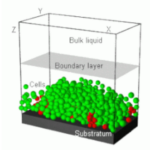
The image shows the geometry of the biofilm, with an inert substratum at the bottom and the bulk liquid at the top, separated from the growing biofilm by a mass transfer boundary layer at a constant height above the biofilm. The substrates (nutrients) diffuse downward from the bulk liquid through the boundary layer into the biofilm (courtesy of Cardiff School of Biosciences, Wales, UK)
3. Microbial Communities
No bacterium is an island—that is, nearly all bacteria live with, and depend upon, other microorganisms for energy, carbon and other nutrients. The biofilm physically contains substances that are released by microorganisms, making them more available to other microbes in the biofilm.
A classic example of this is provided by the degradation of cellulose. Cellulytic microbes are able to break the cellulose into sugar monomers, which fermenting bacteria can use. Their fermentation products are smaller organic acids, carbon dioxide and hydrogen gas, which methanogenic (methane-producing) or sulfate-reducing bacteria can use as their carbon and energy sources. Therefore, cellulose-utilizing, fermenting, methanogenic and sulfate-reducing bacteria can all exist in a single biofilm.
Another example is aerobic versus anaerobic bacteria in a biofilm. Aerobic bacteria require oxygen, so they will be present in the outer layer of a biofilm which is exposed to oxygenated water. These aerobic bacteria will consume oxygen as the oxygenated water diffuses through the biofilm, so that the middle and inner layers of the biofilm may be anoxic (low oxygen concentration) or anaerobic (essentially zero oxygen). In this deeper section of the biofilm, one may expect to find nitrate-reducing, sulfate-reducing or methanogenic bacteria. Thicker biofilms will tend to have a wider diversity of microorganisms, as they support a vast array of microenvironments.
In addition to food (carbon) and energy sources, genetic material can be more easily exchanged within the confines of the biofilm. This increases the potential that new, better-adapted, strains of bacteria will evolve within the biofilm.
Where Are Biofilms Found?
The short answer is: everywhere. In nature, biofilms are found on most moist surfaces, on plant roots, and within nearly every living animal. They can be detrimental to humans by growing within human bodies (causing infections and other problems), and by growing on surfaces within aquatic systems (such as in pipelines, on the surface of heat exchangers and on the bottoms of boats). Often biofilms can be used to mankind’s advantage in a number of industrial processes. Primarily, biofilms help native bacteria do what they do best—grow and recycle all of the carbon and nutrients that other organisms produce, and provide humans with the type of environment to which we have become acclimated.

How Thick Are Biofilms?
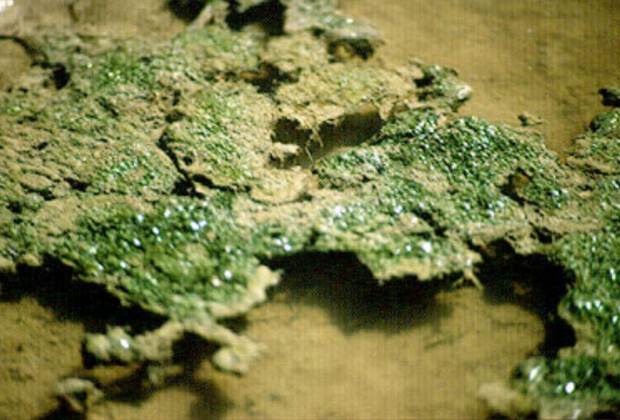
A biofilm consisting of a single layer of bacteria (monolayer) may be as thin as one micron (10-6 m). However, such biofilms are rare. Even anaerobic biofilms will generally be several cells thick (several microns). Biofilms in oxygenated environments may be as thick as several centimeters (10-2 m). Microbial mats are specialized microbial communities composed mainly of photosynthetic bacteria. As the name suggests, these mats may become quite thick.
Adverse Effects of Biofilms
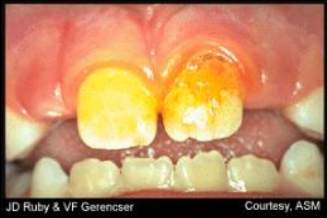
Biofilms are responsible for diseases, such as otitis media, bacterial endocarditis (infection of the inner surface of the heart and its valves), cystic fibrosis and Legionnaire’s disease. They may be responsible for a wide variety of hospital-acquired infections, form the surfaces of catheters, medical implants, wound dressings, or other types of medical devices. They colonize household surfaces, including toilets, sinks, countertops and cutting boards. Poor disinfection practices and ineffective cleaning products may increase the incidence of illnesses associated with pathogenic organisms associated with normal household activity.
Biofilms are highly resistant to antibiotics. Consequently, very high and/or long-term doses are often required to eradicate biofilm-related infections.
Microbial biofilms on surfaces cost billions of dollars in each year in equipment damage, product contamination, energy losses and medical infections. For example, biofilms are notorious for causing pipe plugging, corrosion and water contamination. Biofilm contamination and fouling occurs in nearly every industrial-based process, including water treatment and distribution, pulp and paper manufacturing, and the operation of cooling towers.
Beneficial Aspects of Biofilms
Some reactors designed to promote biofilm growth [such as BioHaven matrix] are very effective for treating environmental wastes such as sewage, industrial waste streams or contaminated groundwater. Bacterial processes using both attached bacteria (biofilms) and suspended bacteria are the primary method for treating sewage. Biofilm reactors are also increasingly used to treat contaminants in water such as nitrate, perchlorate and methyl tertiary butyl ether (MTBE), because they completely degrade the contaminant and are usually cost-effective.
Biofilms attached to particles of contaminated soils and aquatic sediments help degrade soil-bound contaminants occurring from accidental chemical releases into the environment. This process is called in situ bioremediation, and has become an accepted and increasingly important method for cleaning up soils and groundwater contaminated from oil spills and other chemical releases.
Biofilms attached to plant roots – both floating and in-ground – help cycle nutrients to and from the plant, resulting in increased growth and productivity. One such plant microbe association is called the rhizosphere, and is a relationship between the plant roots/hairs and a complex microbial community. The rhizosphere association is mutualistic, meaning that it benefits both the bacteria and the plant. Plant roots secrete significant amounts of sugars, amino acids, vitamins and plant hormones, which vastly stimulate microbial growth in the immediate vicinity of the root. This relationship may also be important to the plant in that the microbial population may increase the nutrient absorption by the plant from the water or soil it grows in.
Several international research groups are dedicated to better understanding biofilms. These groups include:
• The Center for Biofilm Engineering, Montana State University
• The University of Calgary Biofilm Engineering Research Group (BERG)