
REDUCE METHANE, REDUCE GREENHOUSE GASES
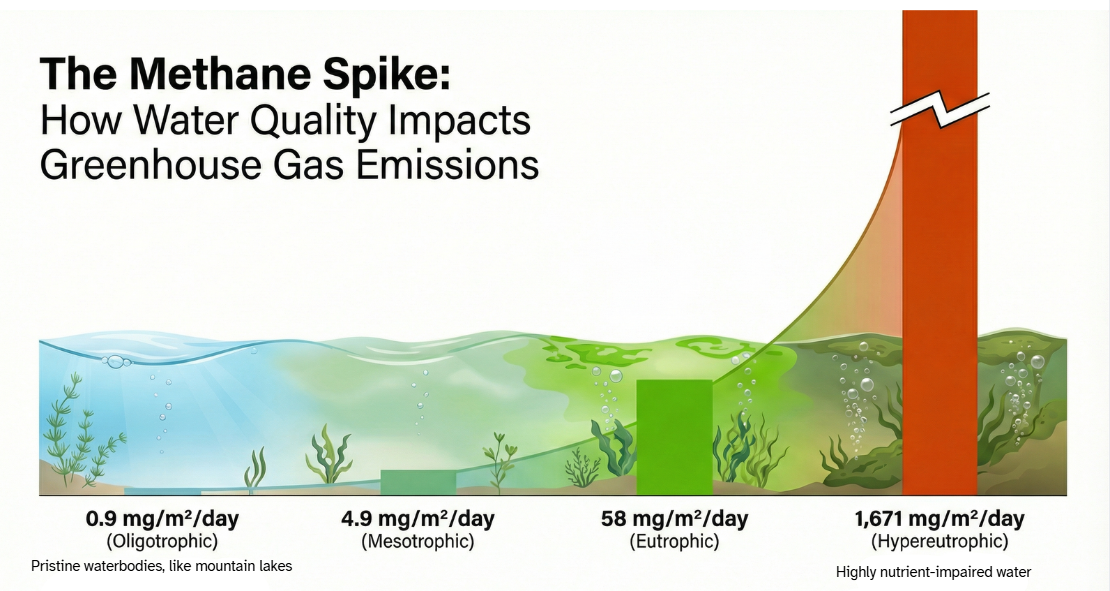
The link between methane emissions and eutrophication:
Methane emissions correlate with lake size and the level of eutrophication the lake experiences. Methane is most prevalent in lakes with oxygen-poor, carbon-rich environments that experience algae blooms. The authors of a 2018 study noted the possibility that one particular form of carbon is more readily turned to methane (CH4). Therefore, they argue, ongoing eutrophication is a key factor in the increase of global methane production, as shown here in the graph.
How RAM and BioHavens restore our inland waters:
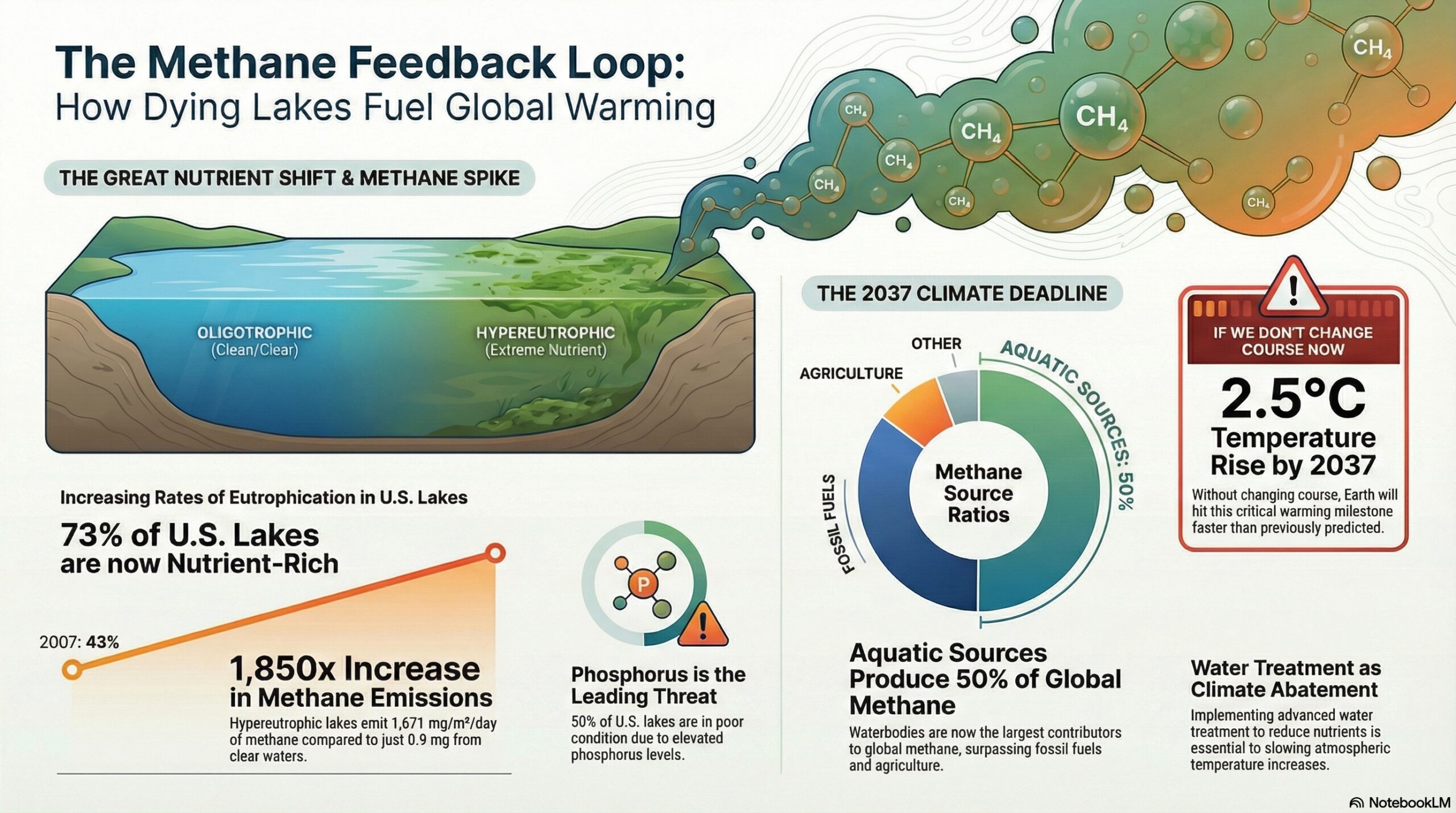
Aquatic methane is a form of biogenic methane that is far more pervasive than enteric methane (from cows). Yale scientists estimate that 13% of all greenhouse gas emissions derive from aquatic sources. Scientific consensus is that approximately 50% of methane from all sources is being emitted by impaired freshwater. Aquatic methane is now being factored into the Intergovernmental Panel on Climate Change (IPCC) greenhouse gas inventory calculations and coming to the attention of the major philanthropic climate funding agencies. This is exciting news for communities and individual lake and pond stewards who are looking for practical ways to contribute to climate action.
Be a Part of the
Change, Starting
with our Water
Whether you have questions about our technology, need support, or want to share your feedback, our dedicated team is here to assist you every step of the way.
Email
info@floatingislandinternational.com
Phone
+1 406.373.5200
Location
Helena, MT