RAM - Fish Fry Lake
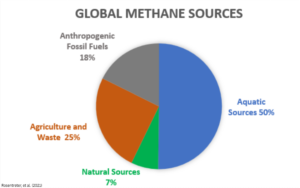
Fish Fry Lake was dying… And we brought it back. This lake, like many freshwater bodies, is capable of emitting vast amounts of methane into the atmosphere. In fact, inland lakes and other freshwater bodies have been identified as the largest source of atmospheric methane (Rosentreter et al., 2021).
We brought Fish Fry Lake back to life by simply increasing the concentration of dissolved oxygen (DO) at the benthic (bottom) zone. The system we installed is called RAM (Reduction of Aquatic Methane). The oxygenated water circulates horizontally above the sediment, rather than vertically as seen in traditional aerators. This lack of man-made vertical circulation keeps the thermoclines intact, allowing cold water species (trout, salmon, grayling) to survive and thrive at depth.
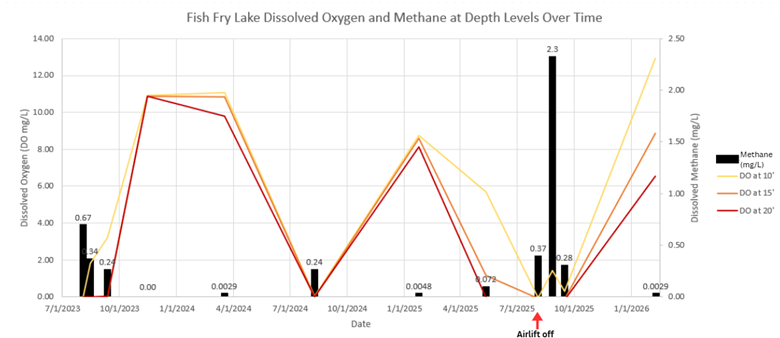
Another advantage of horizontal benthic oxygenation is the suppression of aquatic methane. By providing a habitable zone for oxygen-breathing methane-eating microbes, right at the sludge-water interface, we decrease or completely halt methane emissions from these waters. We’ve observed this over the last 3 years while RAM has been running.
To understand the effects of RAM, DO concentrations and temperature data were collected consistently. Water samples were collected at different depths to determine the concentrations of dissolved methane. Other data and samples include pH, dissolved organic carbon (DOC), air samples, and more. The most important data for the sake of this story, is the DO and dissolved methane concentrations.